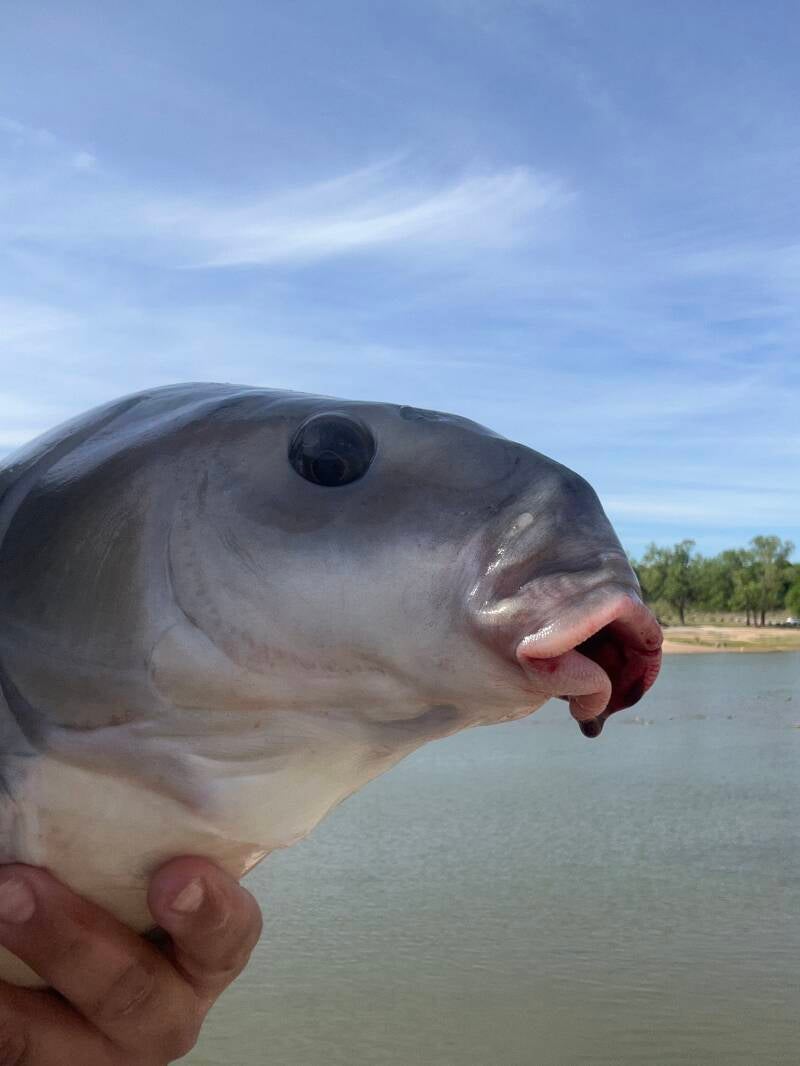
Meet the common carp, Cyprinus carpio. It is native to warm waters of Europe and Asia, but pretty much lives everywhere! Settlers to the US brought the common carp with them as one of their favorite food fish in 1877. Carp are well known for spreading their babies all over the place! This is exactly what happened and carp have become permanent residents of North American waters.
Carp can live in water with very low oxygen, which is why people frequently see them loudly jumping out of muddy rivers and lakes. They are very tough minnows with heavy skulls, thick scales and sharp spines embedded in their fins. This makes it harder for monsters like alligator gar to catch adult fish for a meal!
Carp eat almost anything that fits in their mouths. They love sucking up aquatic plants on rocky surfaces and digging into mud for small water critters like snails and mussels. This makes them important to water critter population control especially when dealing with harmful invasives like zebra mussels.
When they have predators, carp can be a balanced part of the ecosystem. Large gar, catfish, and bass inhale young carp with no questions asked. Bluegill and crappie happily eat the 300,000+ eggs that each female drops carelessly every spawn. Carp in lower oxygen water with few predators can become a problem fast, muddying water which kills native plants and fish as well as causing algae blooms that further worsen water conditions. This is why it is important for us to monitor water health everywhere, especially within the food chain.
Carp are heavy fish that fight hard! The Texas record is over 43lb, the world record was over 75! Carp can make delicious meals if dressed and cooked properly. Here at MGS, we like catching them for a crazy one-of-a-kind fishing experience!